


Marine Generator Packages for Island Power
- Patrick Petty
- 7 days ago
- 6 min read
A generator shipped without the right enclosure, tank, controls, and freight plan is not a power solution. In the Bahamas and other coastal markets, marine generator packages must be specified as complete operating systems from the start. Salt air attacks ordinary steel, fuel deliveries may be limited, and a missing transfer switch or undersized tank can turn a low equipment price into an expensive delay.
For hotels, marinas, construction projects, apartment buildings, private islands, retail facilities, and remote commercial sites, the objective is straightforward: buy the power capacity required, protect it from the environment, and receive it configured for installation. The package should fit the load, the site, the fuel plan, and the port of delivery - not just a catalog specification.
What Marine Generator Packages Should Include
A properly quoted package begins with the generator set itself, but it does not end there. The engine, alternator, controller, cooling arrangement, enclosure, base fuel tank, transfer equipment, and delivery terms all affect whether the system performs when utility power fails.
For stationary coastal applications, the word marine usually means marine-grade construction and corrosion resistance rather than an onboard vessel-rated genset. That distinction matters. A package intended for a dockside facility, resort, island utility support site, or waterfront residence may need a stainless steel or aluminum enclosure, stainless steel or aluminum fuel tank, weather protection, and corrosion-resistant hardware. An onboard vessel installation can have separate classification, ventilation, exhaust, and marine compliance requirements that must be confirmed before quoting.
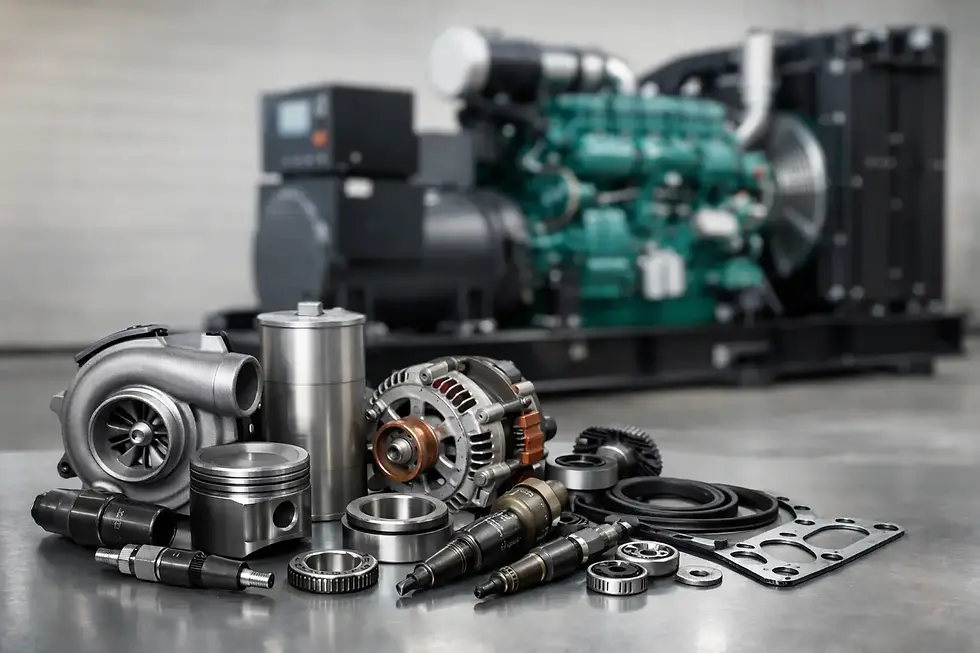
A commercial generator package commonly includes these major components:
A diesel or gas generator sized for prime power, standby power, or a defined duty cycle.
A weatherproof, sound-attenuated enclosure in standard steel, aluminum, or stainless steel, depending on exposure and budget.
An integrated base tank or separate bulk fuel tank sized for the required run time.
A controller, battery charger, breaker, emergency stop, and connection points appropriate for the application.
An automatic transfer switch when the generator must start and transfer automatically after a utility outage.
Freight and delivery documentation matched to FOB, CIF, port delivery, site delivery, or mail boat arrangements.
The exact package changes by job. A 30 kW standby unit for a small waterfront business is not specified the same way as a 500 kW hotel backup system or a multi-megawatt prime-power installation. The right configuration is the one that handles the actual operating conditions without spending unnecessarily on features the site will never use.
Start With Load, Not Generator Size
The most common buying mistake is selecting a generator by building size or by a previous unit's nameplate. Electrical load determines generator capacity. A facility may have a 250 kW generator installed today, yet only require 150 kW after noncritical loads are removed. Another facility may need a larger unit than expected because multiple air-conditioning compressors, pumps, elevators, or refrigeration loads start at the same time.
A useful load review identifies running load, starting load, voltage, phase, frequency, and which equipment must remain energized during an outage. In the Bahamas and most U.S.-style Caribbean electrical systems, 60 Hz is common, but voltage must still be confirmed. A 120/208V three-phase requirement differs from 277/480V three-phase, and the wrong alternator configuration is not a field adjustment.
Motor starting is especially important. A generator can carry a pump or chiller once it is running, but the voltage may dip too far when that motor starts. Soft starters, variable frequency drives, staged loading, and appropriately sized alternators can reduce the required generator capacity. It depends on the equipment sequence. Oversizing is sometimes necessary, but it should be a deliberate decision based on load data rather than a guess.
Prime and standby ratings also cannot be treated as interchangeable. Standby-rated power is intended for emergency operation during utility outages. Prime-rated power is designed for regular or continuous operating duty within the manufacturer’s limits. Remote properties, construction sites, and locations with unreliable utility service often need a prime-power package even when the original request says "backup generator."
Fuel Autonomy Changes the Package
Fuel storage should be sized around the operating plan, not just what fits under the generator. A base tank may provide several hours of run time, which can be adequate in a location with dependable fuel access. On an outer island, a resort, or a critical facility where deliveries can be delayed by weather, a separate bulk tank can be the better operating decision.
Tank capacity depends on generator load, fuel consumption, desired hours of operation, refueling access, and site space. Running at 50 percent load consumes less fuel than operating near full output, but critical planning should account for realistic demand during an outage. Fuel polishing, day-tank arrangements, containment requirements, transfer pumps, and level monitoring may also be required for larger systems.
For diesel equipment that sits on standby for long periods, fuel quality needs attention. Water contamination and microbial growth can create starting problems when the generator is needed most. A complete package should leave room in the budget for fuel maintenance, not only the first fuel fill.
Enclosure Material Is a Lifecycle Cost Decision
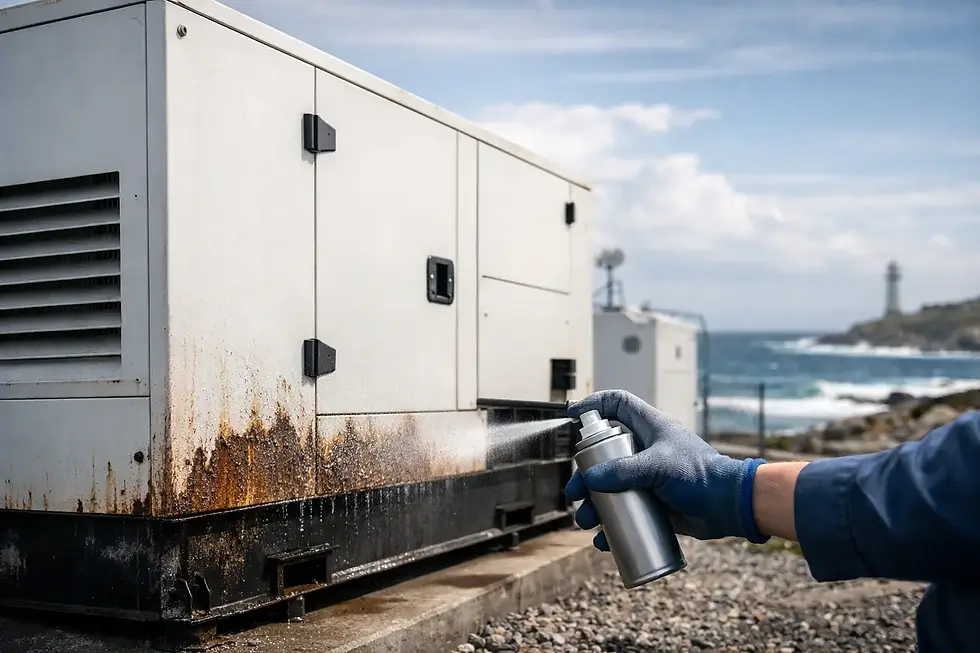
Coastal corrosion is not cosmetic. It affects doors, hinges, fasteners, radiator guards, electrical cabinets, tank surfaces, and structural base components. Standard painted steel enclosures can be suitable for protected sites and controlled budgets, but they require regular inspection and maintenance in salt-air conditions.
Aluminum and stainless steel enclosures offer stronger corrosion resistance for exposed waterfront and island locations. Stainless steel generally costs more up front, yet it can reduce repainting, rust repair, and enclosure replacement over the life of the equipment. The best selection depends on how close the site is to salt spray, whether the unit is under cover, expected maintenance capacity, and the required service life.
Sound level is another enclosure decision. A hotel, residential development, clinic, or marina may require a sound-attenuated enclosure to protect operations and neighbor relations. A construction site or isolated industrial location may prioritize access, ventilation, and price instead. Do not assume every quiet enclosure performs the same way. Ask for the sound rating, distance of measurement, ambient conditions, and whether intake and exhaust silencing are included.
Controls and Transfer Equipment Must Match the Site
An automatic transfer switch is central to a true standby system. It senses utility failure, signals the generator to start, transfers the building load after stable power is available, and returns the load when utility power is restored. The switch must match the voltage, amperage, poles, service entrance requirements, and load type.
For higher-value facilities, controls may also include remote monitoring, low-fuel alarms, generator exercise scheduling, load management, and parallel operation. These options are practical when staff are not always onsite or when several generators must share the load. They are not mandatory for every project. A simple, well-built system with clear local controls can be the right answer for a small commercial site with trained personnel.
Installation details should be reviewed before shipment. Confirm pad dimensions, cable entry, exhaust routing, ventilation clearances, grounding, crane access, and service-side access. A large generator delivered to a tight island site can become a logistical problem if doors cannot open fully or lifting equipment cannot reach the placement area.
Price the Delivered System, Not Just the Generator
A low generator price can be misleading if it excludes the enclosure material, tank, transfer switch, freight, duty, port charges, local transport, and commissioning support. Buyers should request a quote that separates the equipment scope from delivery terms so costs are visible before the order is placed.
For export projects, clarify whether pricing is FOB or CIF, the named port, packing requirements, and what documentation is included. Bahamas buyers should also account for customs duties, VAT, port fees, and final delivery to the site or mail boat. These costs vary by destination and shipment size, which is why a project-specific freight quotation is more useful than a generic shipping estimate.
Factory-direct sourcing can create substantial savings compared with traditional U.S. retail pricing, particularly for larger kW packages, custom stainless configurations, and multiple-unit orders. The value is strongest when the supplier coordinates the generator, enclosure, tank, controls, and logistics under one specification. Splitting those purchases across several vendors can save a small amount initially while creating expensive compatibility and responsibility issues later.
Build the Quote Around Real Operating Conditions
The fastest route to an accurate quote is to provide the required kW or a load list, voltage and phase, prime or standby duty, preferred fuel, run-time target, enclosure material, transfer switch requirement, delivery port, and site constraints. If the project has a specific engine preference, sound limit, tank capacity, or remote-monitoring requirement, state it early.
Carib Generators can configure diesel and gas systems from approximately 10 kW to 3550 kW, with custom enclosure and fuel storage options for Caribbean conditions. A detailed specification prevents both underbuying and unnecessary add-ons, while factory-direct pricing keeps the package focused on value.
The right marine generator package is the one that arrives ready for its actual environment, can run for the time the site requires, and leaves no critical component to be sourced after the outage has already started.

Comments