

When Do Generators Need Transfer Switches?
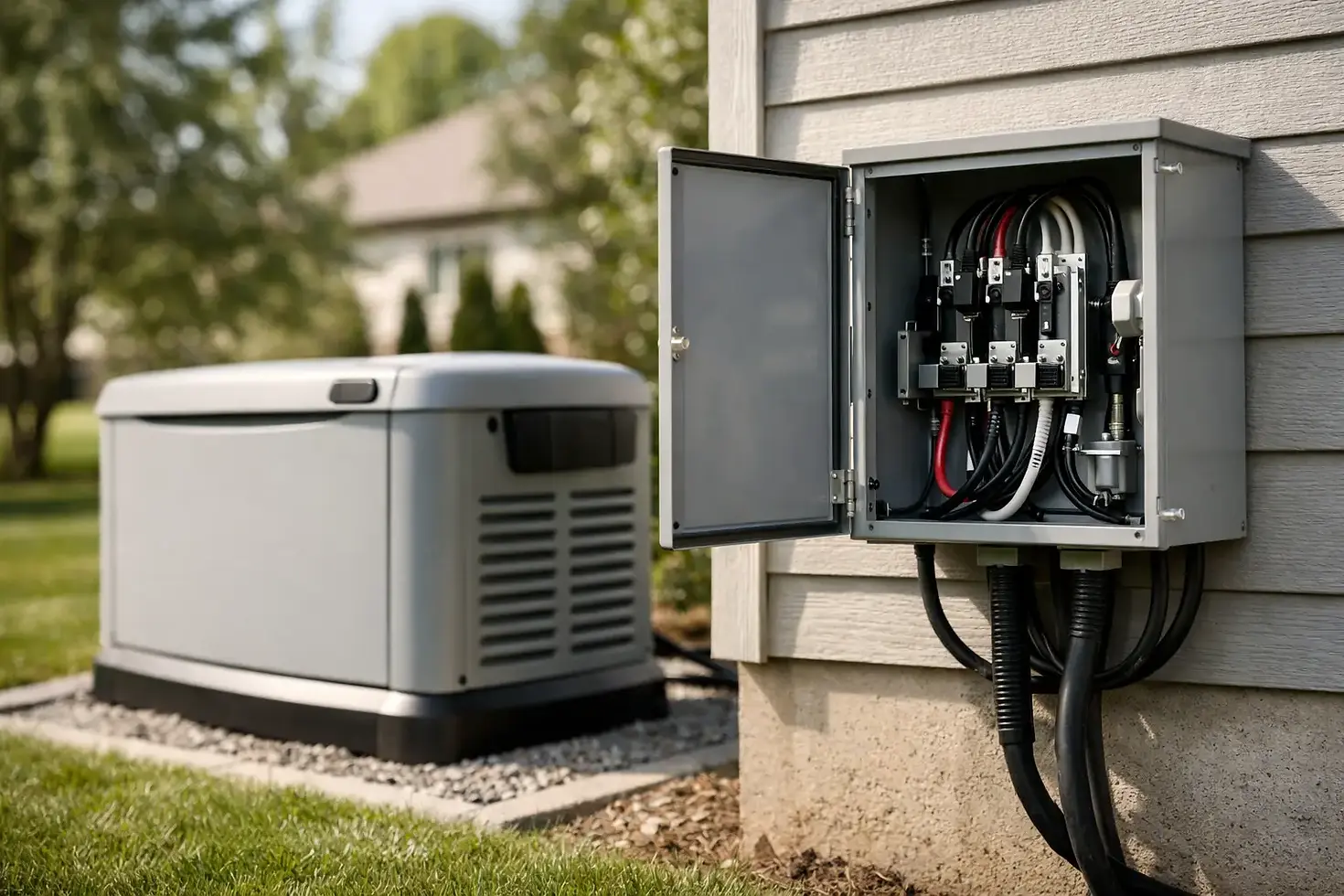
A generator can produce the power your property needs, but it cannot be connected to a building electrical system safely by simply plugging it in or tying it into a panel. When do generators need transfer switches? In practical terms, a transfer switch is required whenever a generator will supply circuits already served by utility power. It isolates the two power sources, prevents dangerous backfeed, and gives the operator a controlled way to move critical loads from utility power to generator power.
For Bahamas properties, coastal commercial sites, hotels, apartment buildings, remote facilities, and construction operations, the question is not whether a transfer switch is an accessory. It is whether the switch should be manual or automatic, what amperage it must carry, and whether it needs to manage the entire service or only essential loads.
When Do Generators Need Transfer Switches?
A generator needs a transfer switch when it is connected to a facility's existing wiring, distribution panel, or service equipment. That applies whether the generator is a small portable unit feeding selected circuits or a 2,000 kW diesel standby system carrying a hotel, utility support load, or industrial operation.
The transfer switch performs one non-negotiable job: it prevents utility power and generator power from energizing the same conductors at the same time. Without properly designed transfer equipment, generator power can travel backward through the service entrance and utility lines. This is called backfeeding. It can injure utility workers, destroy equipment, damage the generator, and create a fire hazard.
A generator does not need a transfer switch when it powers individual appliances directly through its own receptacles and extension cords. For example, a portable generator running a dewatering pump, temporary jobsite tools, a standalone freezer, or a mobile light tower may not need a building transfer switch. The moment that generator is intended to feed a panelboard, hardwired equipment, or building circuits, transfer equipment becomes part of the required system design.
Local electrical codes, utility requirements, and the authority having jurisdiction determine the final installation requirements. A qualified electrical contractor should confirm service ratings, grounding, neutral switching, fault current ratings, and permitting before equipment is installed.
A Generator Breaker Is Not a Transfer Switch
Buyers sometimes assume the main breaker on a generator provides the same protection as a transfer switch. It does not. The generator breaker protects the generator output and helps prevent overload. It does not isolate the utility source from the building wiring.
Likewise, turning off a building's main breaker is not a reliable substitute for approved transfer equipment. Main breakers can be operated incorrectly, may not provide the required mechanical interlock, and do not create a purpose-built transfer sequence. In commercial applications, relying on manual workarounds is a poor operating practice and a major liability.
A properly specified transfer switch uses mechanically interlocked switching so the normal utility source and emergency generator source cannot be connected together. For larger systems, the equipment may also include a controller, voltage sensing, programmable delays, exercise functions, load-shed outputs, remote annunciation, and bypass-isolation capability.
Manual Transfer Switches for Controlled Backup Loads
A manual transfer switch is often the right choice where outages are occasional and a trained person is available to start the generator and transfer the load. It is common for small commercial buildings, remote homes, workshops, retail locations, dock facilities, and selected-load backup packages.
With a manual system, the operator starts the generator, confirms stable voltage and frequency, then moves the switch from utility to generator. When utility service returns and is stable, the operator transfers the load back and shuts down the generator after a proper cooldown period.
Manual transfer equipment costs less than an automatic transfer switch and can be an effective solution where the load is not life-safety critical. It also gives the operator direct control over when generator power is applied, which can be useful where fuel consumption must be tightly managed.
The trade-off is simple: someone must be on site, capable of operating the equipment, and willing to respond during the outage. That is not a workable plan for an unattended vacation property, a telecom site, a hotel with guests, or a facility where a few minutes without power creates revenue loss or equipment risk.
When an Automatic Transfer Switch Is the Better Choice
An automatic transfer switch, commonly called an ATS, is designed for properties that need power restoration without waiting for an operator. It continuously monitors the utility source. If utility voltage falls outside programmed limits or fails completely, the ATS signals the generator to start. Once the generator reaches acceptable voltage and frequency, the switch transfers the designated load.
When normal power returns, the ATS verifies that utility service is stable, transfers the load back after a programmed delay, and allows the generator to run unloaded for cooldown before shutdown.
Automatic transfer switches are typically the better fit for:
Hotels, resorts, and rental properties with occupied rooms
Medical offices, clinics, pharmacies, and refrigerated medicine storage
Apartment buildings, condominiums, and critical common-area systems
Water pumps, lift stations, wastewater equipment, and utility support loads
Remote island facilities with limited access to trained operators
Server rooms, communications equipment, security systems, and access control
Not every commercial property needs an ATS for every circuit. A property may use automatic transfer for fire pumps, emergency lighting, security, refrigeration, communications, and water systems while keeping nonessential loads off the generator. This approach lowers required generator capacity, reduces fuel use, and prevents overload during an outage.
Whole-Building Transfer vs. Essential-Load Transfer
The switch configuration must match the operating requirement. A whole-building transfer switch moves the facility's complete electrical service to generator power, assuming the generator is sized to carry that demand. This is common for facilities that cannot realistically operate in a reduced mode, such as certain resorts, large villas, processing operations, and utility-related sites.
An essential-load transfer switch supplies a dedicated emergency panel or selected circuits only. Typical essential loads include emergency lighting, refrigeration, pumps, communications, gate controls, IT equipment, and a limited amount of air conditioning. This is frequently the most cost-effective design because it avoids buying a generator large enough to support every noncritical load.
Load calculations matter. Large motors, central air conditioning, elevators, pumps, compressors, and kitchen equipment can produce substantial starting demand. A generator package should be specified around actual running load, motor starting requirements, anticipated load steps, voltage, phase, frequency, and future expansion. Selecting an ATS before confirming those details can result in an undersized switch, incorrect pole configuration, or poor load management.
Transfer Switch Ratings That Must Match the Project
Transfer switches are not one-size-fits-all. The amp rating must meet or exceed the connected service or emergency load requirement. Common commercial ratings include 100A, 200A, 400A, 800A, 1,200A, 1,600A, 2,000A, 3,000A, and higher. The correct rating depends on the generator output, distribution design, conductor sizing, and how much of the facility will transfer.
Voltage and phase must also match. A 120/240V single-phase property needs different equipment from a 208Y/120V, 240V three-phase, 480Y/277V, or 600V three-phase commercial system. A wrong voltage or phase selection is not a minor detail. It can stop the system from operating or damage connected equipment.
Neutral configuration is another key decision. Some installations require a solid neutral transfer switch, while others require a switched neutral, often called a four-pole switch on three-phase systems. The correct configuration depends on the generator grounding arrangement and the facility's electrical design. This should be engineered and installed by qualified professionals, not guessed during installation.
For coastal and island projects, enclosure selection matters as well. Indoor-rated equipment does not belong in exposed salt-air conditions. NEMA 3R or higher outdoor-rated transfer equipment, corrosion-resistant enclosures, properly protected terminals, and thoughtful placement away from direct salt spray help avoid premature failure. Stainless steel or aluminum package components can be justified where corrosion exposure is severe and replacement logistics are expensive.
Open Transition, Closed Transition, and Bypass Options
Most standby systems use open-transition transfer. The switch disconnects from one source before connecting to the other, creating a brief interruption during transfer. For many properties, this is completely acceptable.
Closed-transition transfer briefly parallels the generator and utility sources during transfer, allowing near-no-break operation. It is used where interruption must be minimized, but it requires more complex controls, utility approval in many cases, and a higher equipment budget.
Bypass-isolation transfer switches are specified for critical facilities where the ATS must be serviced without shutting down the emergency load. They are more expensive, but they can make sense for hospitals, major resorts, data operations, and infrastructure sites where downtime during maintenance is unacceptable.
Build the Transfer Switch Into the Generator Package
The transfer switch should be selected at the same time as the generator, enclosure, fuel tank, and distribution equipment. Treating it as an afterthought creates avoidable delays, mismatched ratings, and field modifications that cost more than proper specification from the start.
Carib Generators can quote diesel or gas generator packages from 10 kW to 3,550 kW with manual or automatic transfer switching, custom enclosure options, integrated fuel storage, and delivery terms built around Bahamas and export requirements. Provide the site voltage, phase, service amp rating, critical loads, desired runtime, location conditions, and delivery port so the package can be configured for the work it must do.
The right transfer switch is not just a code item. It is the control point that makes backup power safe, usable, and dependable when the grid is not.


Comments