

What Generator Size for Apartment Complex?
- Patrick Petty
- May 29
- 6 min read
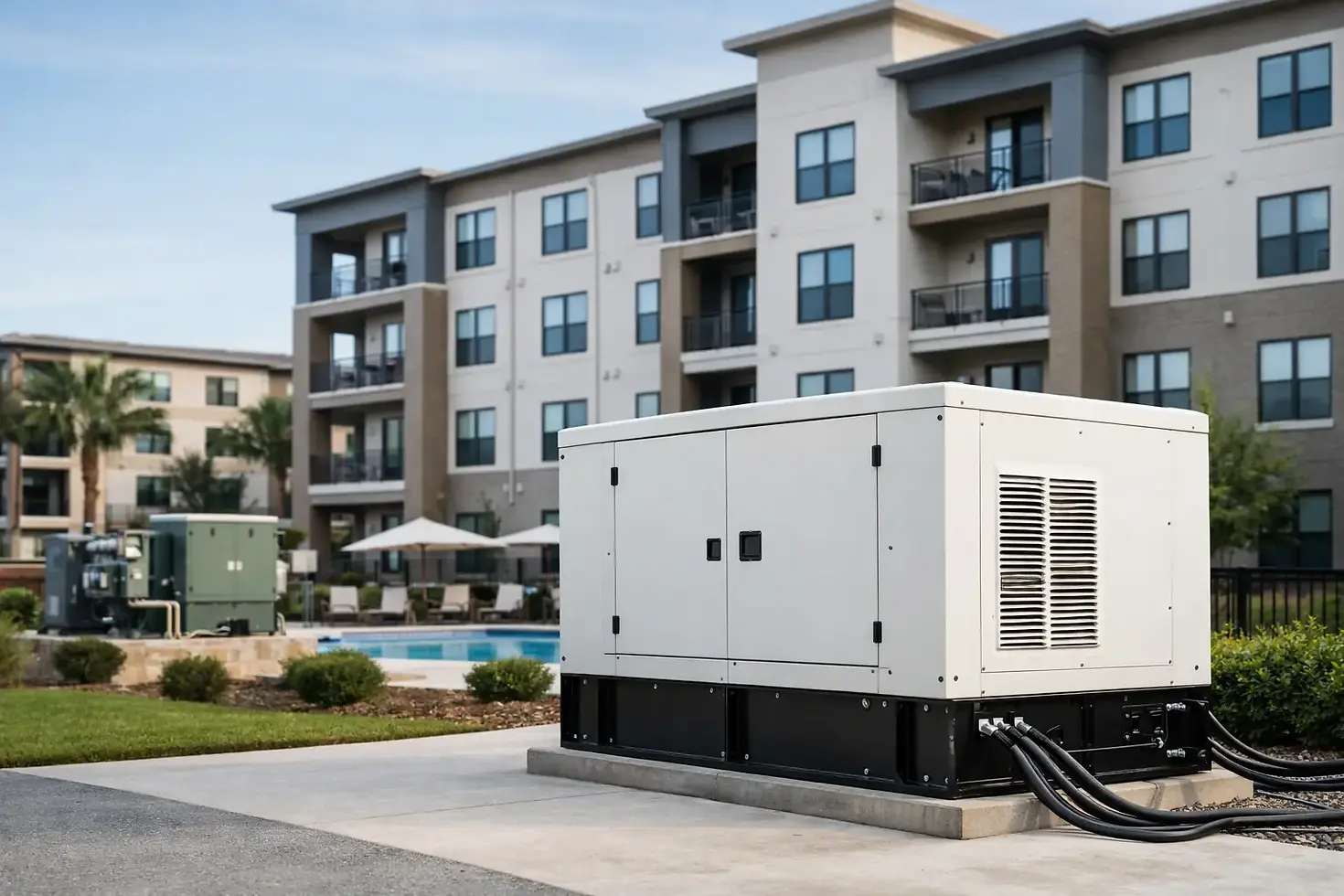
When a property owner asks what generator size for apartment complex backup, the real question is usually this: are you covering life safety only, or are you trying to keep the whole building operating like the utility never dropped? That difference can move a project from a 100 kW standby set to multiple megawatts, and it affects equipment cost, fuel storage, switchgear, enclosure selection, and delivery planning.
What generator size for apartment complex backup depends on
There is no honest one-size-fits-all answer. A small three-story walk-up with common area lighting and a fire pump has a completely different load profile than a waterfront high-rise with elevators, booster pumps, chilled water equipment, laundry, and tenant panel backup.
The first step is defining the backup objective. Some apartment complexes only need code-required emergency and legally required standby loads. Others want optional standby power for leasing continuity, tenant retention, refrigeration, security systems, internet rooms, and partial in-unit circuits. If you do not separate those categories early, you can overspend fast or, just as bad, undersize the system and still have unhappy tenants during an outage.
For multifamily properties, generator sizing usually starts with five load groups: life safety systems, vertical transportation, water and sewer support equipment, common area HVAC and lighting, and tenant loads. In coastal and island markets, you also need to think about salt exposure, fuel autonomy, and how often the utility actually fails. A property with frequent outages typically justifies a larger, more durable package than a building in a stable grid zone.
Start with load classification, not generator brand or frame size
A proper sizing exercise begins with a load schedule. That means identifying every circuit or piece of equipment intended to run during an outage, its running kW or kVA, voltage, phase, starting method, and whether it cycles or runs continuously.
For apartment complexes, the code-driven loads often include egress lighting, fire alarm, smoke control where applicable, emergency communications, fire pumps, sump or sewage pumps, and at least one elevator if required by the building design and jurisdiction. Then come the business decision loads: leasing office power, gate systems, CCTV, IT racks, pressure pumps, corridor air conditioning, and selected tenant services.
If the owner wants to back up tenant apartments, the project changes substantially. Supplying full apartment loads across dozens or hundreds of units can push the generator into a large paralleling system. In many cases, the better commercial answer is to support only essential in-unit circuits, or only selected units, rather than trying to pick up every water heater, dryer, range, and condensing unit at once.
This is where experienced specification matters. Connected load is not the same as real operating load, and real operating load is not the same as starting demand.
Typical apartment complex loads that drive generator size
The biggest drivers are usually motors and central mechanical equipment. Elevators, domestic water booster pumps, lift stations, fire pumps, condenser water pumps, and HVAC compressors can create high inrush current that a standby generator has to absorb without unacceptable voltage and frequency dip.
Lighting and receptacle loads are simpler. They add steady kW, but they usually do not hit the generator as hard as motor starting. Modern LED common area lighting keeps those numbers lower than they used to be. The expensive surprises are usually in mechanical rooms.
A practical example helps. A mid-size complex might have emergency lighting and life safety loads totaling 20 to 40 kW, one elevator with controlled starting, water booster pumps at 20 to 50 kW, a sewage pump package, access control and security systems, and limited office or common area air conditioning. That kind of project can easily land in the 125 to 250 kW range depending on how loads are sequenced.
Move to a larger multibuilding property with several elevators, central chilled water, multiple pump sets, clubhouse loads, and selected tenant backup, and now 350 kW to 800 kW is not unusual. Full-building backup for a high-rise can require 1000 kW and up, sometimes with multiple generators in parallel so the site can manage redundancy and future expansion.
How to calculate what generator size for apartment complex projects
Start with the load list and total the running kW of everything intended to operate. Then identify the largest motor starting event, or the worst-case sequence if multiple motors can start close together. After that, account for power factor, harmonics from modern controls and VFDs, ambient temperature, elevation, and fuel type.
Diesel is often the preferred standby choice for apartment complexes because it handles transient loading well, supports large motor starting, and typically offers more straightforward packaged fuel autonomy. Natural gas can work where utility gas is reliable, but in storm-prone or island environments, diesel usually gives the owner more control.
Do not size only to connected amperage on paper. Use realistic demand factors and load step planning. With properly configured automatic transfer switches and time delays, you can stage elevator pickup, pumps, and HVAC loads instead of asking the generator to accept everything at once. Smart sequencing can reduce the required generator size and protect the budget.
A margin is also necessary, but not an exaggerated one. Oversizing a standby diesel set can lead to light-load operation and wet stacking if the generator regularly runs far below its intended load band. Undersizing leads to nuisance trips, poor motor starting, and tenant complaints during the exact event the system was supposed to solve. The right answer is normally a calculated size with room for real-world transients and modest future growth.
Fuel runtime, enclosure, and site conditions matter
For apartment projects in the Bahamas and similar coastal markets, generator size is only part of the buying decision. Runtime expectations matter just as much. If the owner wants 24, 48, or 72 hours of operation without refueling, the fuel tank package and site footprint need to be planned alongside the genset.
That matters on tight multifamily sites where access roads, parking count, and setback requirements are already difficult. A larger tank can be more valuable than stepping up one generator frame size, especially if the actual concern is outage duration rather than additional kW.
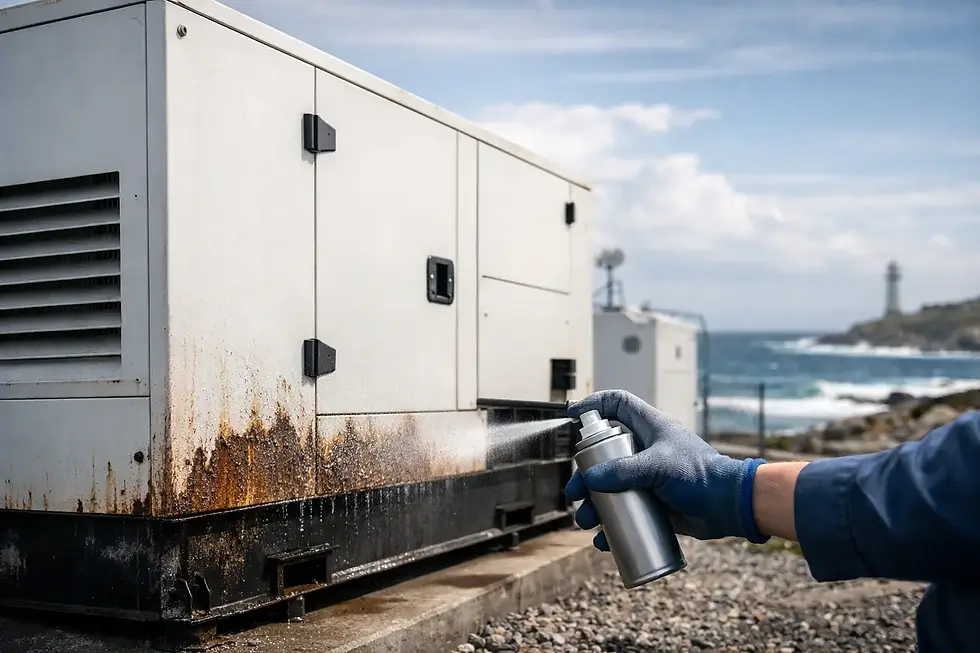
Enclosure material also matters near salt air. Powder-coated steel may be acceptable inland, but marine and coastal installations often justify stainless steel or aluminum enclosures and tank options to reduce corrosion issues and protect resale value. A cheap package can become an expensive package once corrosion, repainting, and panel failures start showing up.
Common sizing mistakes owners and contractors make
The first mistake is trying to back up all tenant loads without checking whether that is actually necessary or financially sensible. The second is ignoring starting kVA on elevators and pumps. The third is treating the generator as a standalone item instead of a system that includes ATS units, controls, enclosure, tank, exhaust routing, sound attenuation, and logistics.
Another frequent mistake is assuming utility gas is always the lower-risk choice. In some regions it is. In hurricane-exposed and remote markets, fuel stored on site can be the safer operational decision. The last big error is buying strictly on advertised kW without reviewing ambient derate, alternator performance, and site-specific accessories.
A realistic sizing range for apartment complexes
If you need a quick market reality check, small apartment properties covering essential systems only may fall around 60 to 150 kW. Mid-size complexes often land between 150 and 400 kW. Large properties with multiple elevators, pumps, and broad common-area backup can move into the 400 to 1000 kW range. Full high-rise backup or campus-style multifamily developments can go beyond that and may require parallel units.
Those ranges are useful for budgeting, not ordering. The final size should come from a one-line review, load schedule, motor starting analysis, and a clear definition of what stays on during an outage.
What to have ready before requesting a quote
If you want a fast, accurate proposal, prepare the site voltage, phase, frequency, required loads, largest motor data, desired runtime, sound requirements, fuel preference, and installation location. Also confirm whether the system is standby only or prime-capable, whether corrosion-resistant enclosure options are needed, and whether delivery logistics involve port handling, customs, or island forwarding.
That information lets a supplier quote the complete package instead of guessing. For many commercial buyers, especially in export and island markets, the right package is not just the generator. It is the generator, ATS, enclosure, integrated tank, controller configuration, and shipping plan lined up correctly the first time.
A good apartment complex generator is not the biggest unit the budget can tolerate. It is the unit sized to the actual loads, built for the site conditions, and packaged so it shows up ready to work when the grid does not.

Comments