

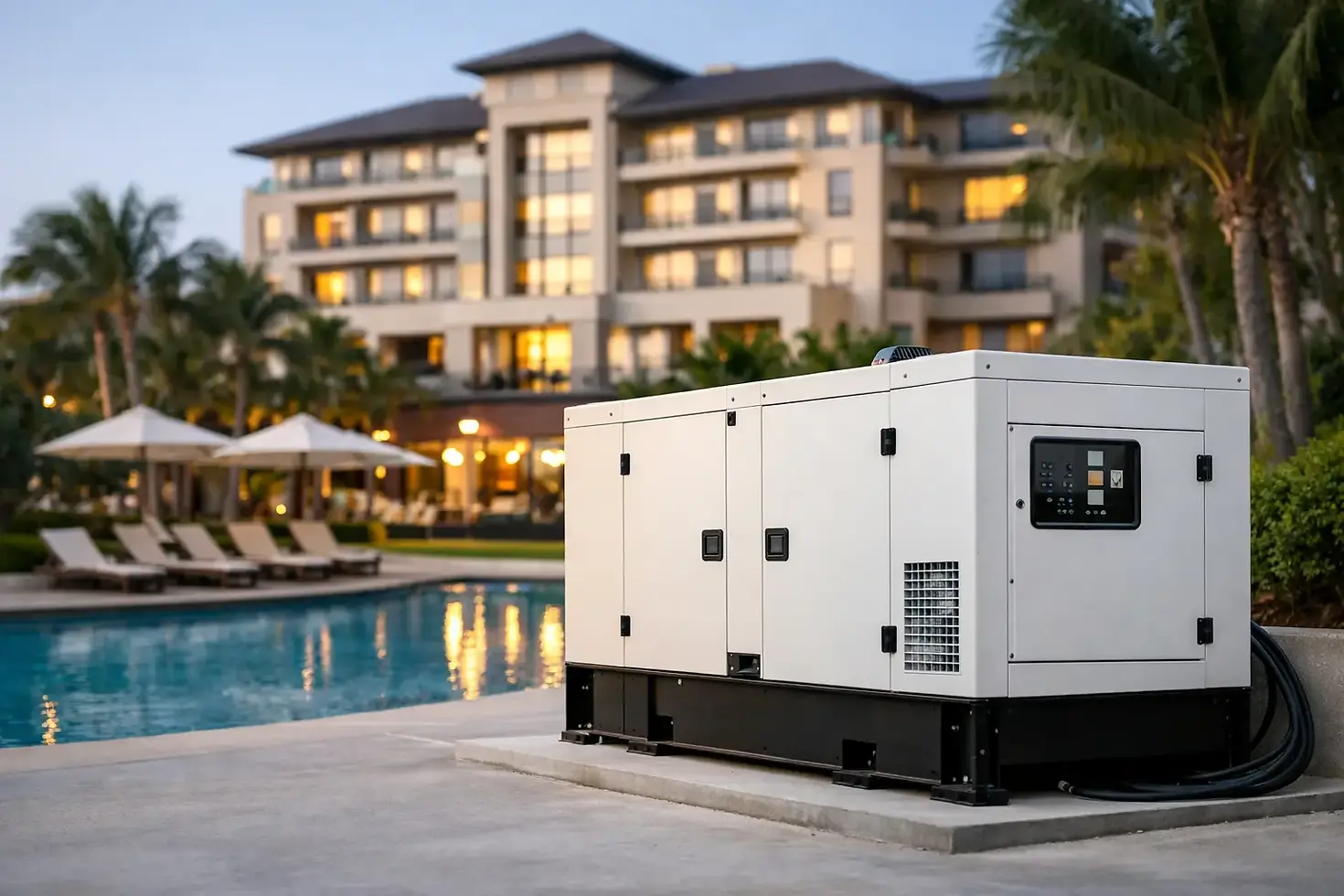
What Size Generator for Hotel Use?
A hotel loses money fast when the power drops. Guest rooms go dark, elevators stop, kitchen operations stall, pumps and chilled water systems shut down, and complaints start before the first hour is over. If you are asking what size generator for hotel operations, the right answer starts with one fact: hotel generator sizing is not based on room count alone. It is based on real electrical demand, startup loads, and how much of the property you need to keep running during an outage.
For some hotels, the answer is a compact standby unit supporting life safety, front desk, emergency lighting, fire pumps, and a limited HVAC strategy. For others, especially resorts, island properties, and larger full-service buildings, the generator may need to support central plant equipment, kitchens, laundry, elevators, water pressure systems, sewage pumps, and a large percentage of guest room load. That can move a project from a few hundred kW into the megawatt range very quickly.
What size generator for hotel projects really depends on
The biggest sizing mistake is treating the generator like a rough square-foot estimate. That may be good enough for an early budget number, but it is not good enough for procurement. Hotel loads are mixed, highly variable, and full of motors. Air conditioning, chilled water pumps, booster pumps, refrigeration, laundry equipment, and elevators all affect the final kW and kVA requirement.
You first need to define the operating goal during outage conditions. Some properties only want legally required emergency and standby loads. Others want enough backup power to maintain occupancy, protect revenue, and avoid guest relocation. A beachfront resort with restaurants, bars, pools, and staff housing is not sized the same way as a limited-service roadside hotel.
A practical starting point is to separate hotel loads into three categories: critical life safety loads, operational continuity loads, and comfort loads. Life safety includes fire alarm, emergency lighting, exit signs, fire pumps if required, emergency communications, and critical egress systems. Operational continuity includes front desk systems, security, internet and telecom equipment, sewage and water pumps, refrigeration, key card systems, and selected elevators. Comfort loads usually include guest room HVAC, common area cooling, kitchen equipment, laundry, and hot water systems.
Typical hotel generator size ranges
There is no single correct number, but some broad commercial ranges help frame a project.
A small limited-service hotel may land around 100kW to 300kW if the goal is emergency coverage and selected operational loads. A mid-size flagged hotel commonly falls in the 300kW to 800kW range depending on HVAC strategy and elevator count. Larger full-service hotels often require 800kW to 2000kW or more. Resorts with multiple buildings, central chilled water, large food service operations, desalination, or extensive pumping systems can go well above that.
These are not quoting numbers. They are planning ranges. The only reliable way to size correctly is by reviewing actual connected load, demand load, motor starting characteristics, and outage operating priorities.
Room count matters, but not as much as mechanical systems
Buyers often begin with the number of guest rooms. That is understandable, but mechanical infrastructure usually drives generator size more than the rooms themselves. A 120-room hotel with packaged terminal AC units may need far less backup capacity than an 80-room property with central chilled water, multiple elevators, a full commercial kitchen, laundry, and pressure boosting pumps.
The question is not just how many rooms the hotel has. The real question is what equipment must stay live when the utility fails.
HVAC is often the biggest variable
If you carry full air conditioning during an outage, the generator size climbs fast. Compressors and fan motors create significant starting and running loads. If the property uses chillers, cooling towers, pumps, or large air handlers, the standby plant may need to be substantially larger than expected.
Some hotels reduce generator size by limiting backup cooling to lobby areas, server or communications rooms, selected corridors, and a portion of guest accommodations. Others use load shedding controls so that large HVAC loads come online in stages rather than all at once. That kind of sequencing can materially reduce the generator requirement.
How to calculate what size generator for hotel demand
The cleanest approach is to build the load schedule from the hotel's one-line diagram or panel schedules, then classify what stays on generator and what stays off. That means listing each major load in kW or converting from amps and voltage, identifying motor loads, and checking which loads start across the line versus through soft starters or VFDs.
You then calculate the total running load and the largest step load. Running load tells you the minimum continuous generator output. Step load matters because a generator can be large enough on paper in total kW but still perform poorly if it cannot handle the starting demand of major motors without excessive voltage and frequency drop.
If only a limited emergency scope is required, the final number may be far below the building's normal utility service. If the owner wants near-normal operation, the standby package may need to support a large share of the property's peak demand.
As a rough guide, many commercial diesel standby systems for hotels are sized to run at a practical operating band rather than right at the edge. Oversizing is not ideal either. A generator that is too large for the actual load can suffer from wet stacking, inefficient fuel burn, and poor engine performance if it spends long periods lightly loaded. Proper sizing is about balance, not just buying the biggest machine available.
Single generator or multiple units
For hotels, one large generator is not always the best answer. In many cases, paralleling two or more units gives better flexibility. A multi-generator setup can improve redundancy, match varying load levels more efficiently, and simplify future expansion.
For example, a property needing around 1200kW of standby power might choose one large set, or it might use two 750kW units in parallel depending on redundancy goals, site conditions, and budget. If one unit is down for service, the other can still carry a meaningful portion of critical load. That matters for occupied hospitality properties where downtime has direct revenue impact.
Site conditions change the sizing
Hotels in island and coastal markets have sizing and packaging issues that inland projects often underestimate. High ambient temperature reduces engine and alternator performance. Altitude can also derate output, though this is less of an issue in most Caribbean installations. Salt air, wind-driven moisture, and exposure to corrosion affect enclosure, controls, tank materials, and long-term reliability.
That is why a hotel generator quote should not stop at kW. You also need to specify the enclosure, sound attenuation level, tank capacity, controller, transfer switch strategy, and weather protection. Stainless steel or marine-grade aluminum enclosures and corrosion-resistant fuel systems are not cosmetic upgrades in coastal applications. They directly affect service life and maintenance cost.
Fuel autonomy matters for hotels
Generator size and runtime planning go together. A correctly sized set without enough onsite fuel still leaves the property exposed. Hotels often need a minimum runtime target based on local grid reliability and fuel delivery risk. Twelve hours, twenty-four hours, or longer may be appropriate depending on the location and the season.
Bigger generators burn more fuel, but undersizing and overloading can create a different kind of failure. Fuel tank sizing should match the actual load profile, not just a brochure burn rate at a single percentage point. If the property is remote, on an island, or exposed to storm disruptions, integrated base tanks or larger sub-base and external tank packages deserve attention early in the buying process.
The most common hotel generator sizing mistakes
The first mistake is sizing from square footage or room count without reviewing major equipment. The second is ignoring motor starting load, especially for HVAC and pumps. The third is failing to decide what the hotel actually wants to operate during outage conditions.
Another common issue is buying for first cost only. A cheaper generator that lacks the right enclosure, controls, tank package, or transfer equipment can become the more expensive project once corrosion protection, site modification, and logistics are added back in. Hotels should buy a complete power package matched to the operating environment, not a bare genset that creates gaps in the field.
Getting to the right size faster
If you want a serious number instead of a guess, prepare a load list with the main service size, major mechanical equipment, elevator count, kitchen and laundry loads, pump loads, desired runtime, and whether the goal is emergency-only or near-full operation. Also note the project location, utility voltage, frequency, and any space or sound restrictions.
That gives a supplier enough information to narrow the correct standby range and recommend whether the job is better served by a single diesel generator, a parallel package, a custom enclosure, or an integrated fuel tank solution. For hotel buyers in coastal and export markets, logistics should be discussed at the same time as electrical sizing. The right generator on paper still needs to arrive configured for the site, the climate, and the actual installation sequence.
For hotels, generator sizing is never just about keeping the lights on. It is about protecting occupancy, preserving operations, and avoiding expensive downtime with equipment that fits the load and the location. If the property cannot afford a bad outage, it also cannot afford a bad sizing decision.


Comments