

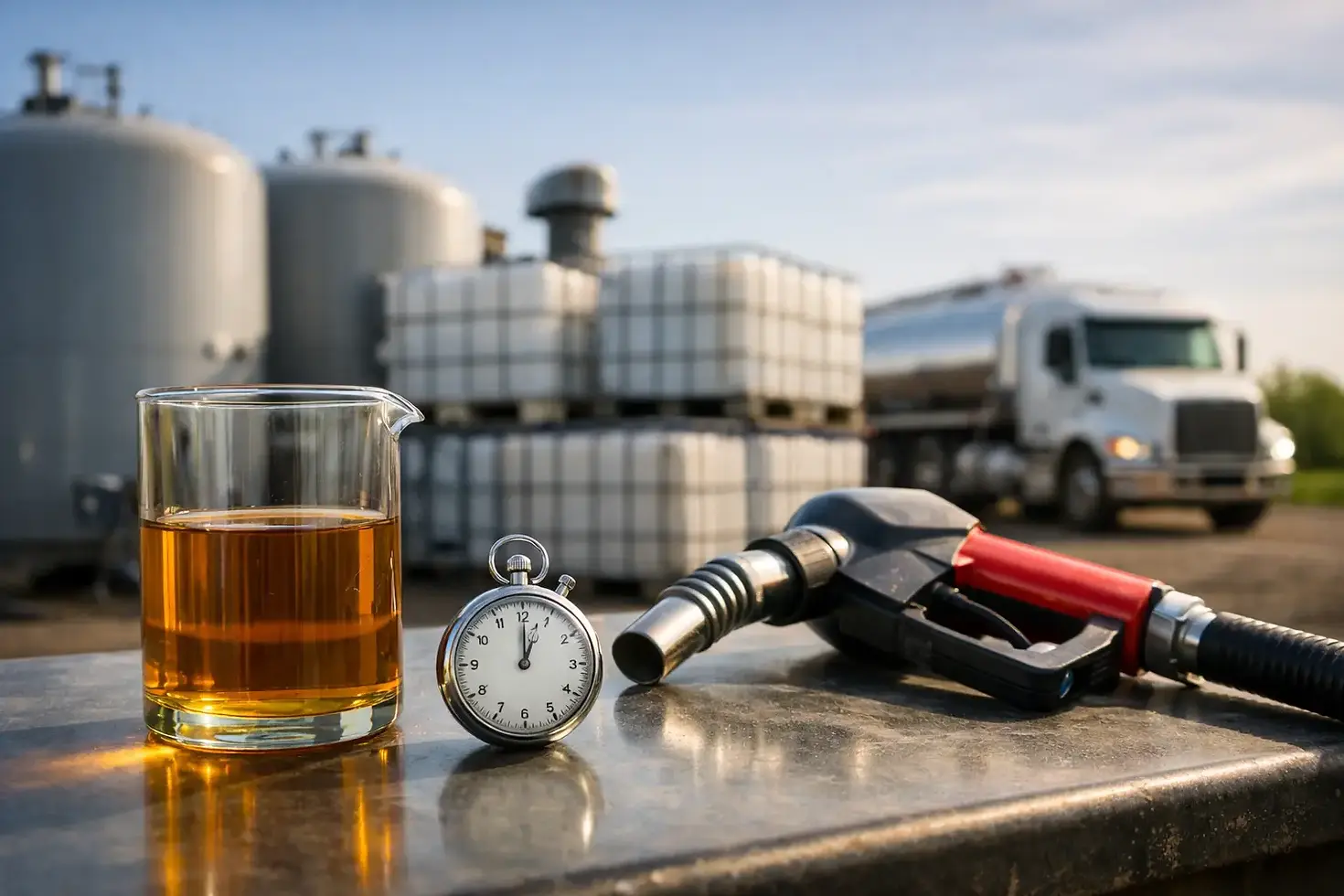
How Long Can Diesel Fuel Stay Stored?
If your generator package is sized correctly but the fuel in the tank is not, you do not have a backup power plan. You have a starting problem waiting for the next outage. For facility managers, resort operators, contractors, and remote property owners, the real question is not just how long can diesel fuel stay stored, but under what conditions it will still be usable when the load hits.
The short answer is this: untreated diesel often stays usable for about 6 to 12 months in storage, while properly treated and well-maintained diesel can often remain serviceable for 12 to 24 months or longer. But storage life is never just about time on a calendar. Heat, moisture, tank material, fuel turnover, and housekeeping practices matter more than most buyers realize.
How long can diesel fuel stay stored in real-world use?
In controlled conditions, diesel can sit for a year without major issues. In hot, humid, coastal environments, that timeline usually shortens unless the storage system is built and maintained correctly. That matters in the Caribbean, on marine sites, and at remote facilities where standby fuel may sit for long periods between outages.
Diesel degrades because it is exposed to oxygen, temperature swings, water contamination, and microbial growth. Once that process starts, fuel can darken, form sediment, lose stability, and plug filters. A generator that ran fine during commissioning can struggle later because the fuel quality dropped while the machine sat idle.
If you are storing fuel for emergency standby only, assume you need a monitoring and maintenance plan from day one. If you are running prime power or frequent-load applications with regular turnover, your risk drops because older fuel gets consumed and replaced more often.
What shortens diesel storage life fastest?
Water is usually the first problem. It enters tanks through condensation, poor seals, loose caps, bad delivery practices, or contaminated fuel transfers. Once water settles in the bottom of the tank, microbes can grow at the fuel-water interface. That contamination creates sludge, acids, and filter-clogging material that can shut down a generator under load.
Heat is another major factor. Higher temperatures speed oxidation and fuel breakdown. In tropical and coastal markets, this is not theoretical. Tanks exposed to sun and daily temperature cycling age fuel faster than tanks located in shaded or controlled environments.
Tank construction matters too. A low-quality steel tank in a corrosive salt-air setting creates one set of problems. Rust, scale, and internal contamination can end up in the fuel stream. A properly specified aluminum or stainless steel tank package reduces that risk significantly, especially where long-term durability and moisture resistance are priorities.
Fuel quality at delivery also matters. If the diesel was already aged, poorly handled, or blended inconsistently before it reached your site, the storage clock did not start when it entered your tank. It started earlier.
Storage conditions matter more than the fuel alone
A lot of buyers ask how long can diesel fuel stay stored as if there is one fixed answer. There is not. The storage system is part of the fuel life equation.
A clean, sealed tank with minimal headspace, proper venting, water management, and periodic recirculation will outperform a basic tank that is left half full in the sun with no inspection schedule. The difference can be months or even years of usable service life.
For standby generator installations, keeping the tank as full as practical can reduce condensation risk by limiting the air volume above the fuel. That does not eliminate water issues, but it helps. Using a desiccant breather or similar moisture-control approach can help further where conditions are severe.
The physical location of the tank also matters. Outdoor tanks near surf, marinas, or open coastal exposure take more punishment. Corrosion-resistant storage packages are not a cosmetic upgrade in these environments. They are an operational safeguard.
Diesel additives and fuel polishing - worth it or not?
In many cases, yes. But the right answer depends on storage duration, climate, and the critical nature of the load.
A stabilizer can slow oxidation and help preserve fuel quality during storage. A biocide can address microbial contamination when water intrusion has created favorable conditions for growth. These are useful tools, but they are not a substitute for proper tank design and fuel housekeeping. If water keeps entering the tank, additives alone will not fix the root problem.
Fuel polishing has a place when diesel has been stored for longer periods, especially in larger stationary systems. This process typically circulates fuel through filtration and water separation equipment to remove contaminants and improve condition. For hospitals, telecom sites, resorts, pumping stations, and other facilities where failure is expensive, polishing can be cheaper than a no-start event during an outage.
The trade-off is cost and scheduling. Smaller users with high fuel turnover may not need it often. Large standby systems with low turnover and long reserve times often benefit from periodic testing and polishing.
Signs your stored diesel may already be a problem
You do not need a lab report to spot every issue, although fuel testing is the best way to confirm condition. In the field, problem fuel often shows up as hard starting, unstable engine operation, blackened or slimy filters, visible sediment, cloudy fuel, or a sour or unusual odor.
Water at the bottom of the tank is a major warning sign. So is frequent filter replacement with no obvious mechanical cause. If your generator starts but stumbles under load, contaminated fuel should be on the shortlist.
For commercial sites, waiting until the engine acts up is the expensive way to manage fuel. A planned inspection routine costs less than emergency callouts, lost occupancy, spoiled inventory, or interrupted operations.
Best practices for storing diesel for generator use
If your generator is a standby asset, fuel management should be treated like battery maintenance or load bank testing. It is not optional if uptime matters.
Start with a quality tank sized for your runtime requirement, not just your upfront budget. Use materials suited to the environment. In coastal and island applications, corrosion resistance matters at the tank, enclosure, hardware, and fittings level.
Keep water out aggressively. Inspect caps, vents, gauges, and transfer points. Drain water bottoms where applicable. Use clean delivery procedures and reputable fuel suppliers.
Rotate stock if practical. If the site consumes diesel in other equipment, planned turnover can keep storage age down. Where turnover is low, use stabilizers as part of a documented maintenance plan and test fuel periodically.
Run the generator on schedule and pay attention to filters and alarms. A monthly exercise routine helps identify fuel-related issues before an outage does. If the system is critical, include fuel sampling and tank inspection in your service plan.
For buyers specifying a new package, integrated design helps. A properly matched generator, base tank or sub-base tank, external bulk storage option, controls package, and corrosion-resistant enclosure create fewer points of failure than patchwork sourcing. That is one reason commercial buyers work with suppliers like Carib Generators when the site conditions are harsh and logistics are not simple.
How long can diesel fuel stay stored in standby vs prime power sites?
Standby sites usually have the greater storage challenge because fuel can sit for long periods untouched. A hotel backup generator, apartment complex standby set, or government emergency plant may only run during testing and outages. That low turnover increases the chance of aging fuel, condensation, and microbial growth.
Prime power sites are different. Construction camps, remote facilities, and off-grid operations usually burn through fuel regularly. As long as storage and delivery practices are disciplined, the fuel is refreshed more often and storage age becomes less of a problem.
Still, prime power users are not immune. Bulk tanks that are oversized, poorly sealed, or contaminated can create the same issues, just on a faster operating schedule.
The practical rule for buyers
If you need one number, use this: plan on 6 to 12 months for untreated diesel, and do not assume it is safe beyond that without inspection. With stabilizer treatment, clean storage, water control, and periodic monitoring, 12 to 24 months is realistic in many installations. Beyond that, testing becomes less of a good idea and more of a requirement.
The bigger the generator, the more expensive the outage, and the harsher the environment, the less sense it makes to guess. Fuel is part of the power system. Treat it that way.
A generator can be factory-new, properly sized, and delivered with the right controls, but if the diesel has been sitting wet and hot in a neglected tank, none of that helps when the grid drops. The smart move is simple: build fuel storage into the equipment specification, maintenance plan, and operating budget before you need the runtime.


Comments