


Factory Direct Diesel Generators That Fit
- Patrick Petty
- May 6
- 6 min read
When a hotel loses power on a full weekend, or a construction site burns through downtime because the utility feed is unstable, the problem is not abstract. It is revenue, schedule, tenant comfort, and equipment protection. That is why factory direct diesel generators matter to buyers who need dependable power without paying layered distributor markup or piecing together accessories from five vendors.
Why factory direct diesel generators make sense
For commercial and institutional buyers, price is only one part of the equation. Factory direct diesel generators can reduce acquisition cost, but the bigger advantage is control. You can specify the set, enclosure, tank, controls, transfer equipment, and shipping terms as one package instead of trying to adapt stock equipment after it lands.
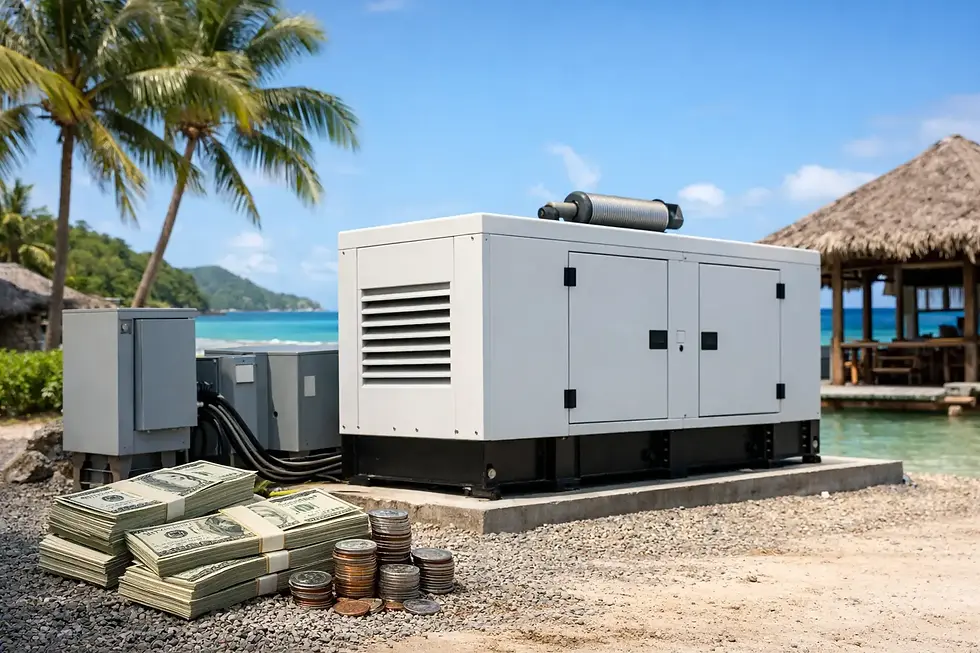
That matters even more in coastal and island markets. A standard open set may look attractive on paper, but salt air, wind-driven rain, and transport exposure quickly show the difference between a basic generator order and a properly built package. Stainless steel and aluminum enclosure options, fuel tank integration, weather protection, and the right controller setup are not extras in those environments. They are part of the job.
The other practical benefit is procurement speed. A buyer sourcing standby power for apartments, retail centers, resorts, marinas, utilities support, or remote properties usually needs answers fast. Can the unit handle the site load? Is it prime or standby rated? What enclosure material is best? What is included in FOB or CIF pricing? Can the package be delivered to the destination port with clear information on duties, port fees, VAT, and final delivery? Factory-direct sourcing works best when those questions are handled before the unit ships.
What buyers should expect in a real generator package
A diesel generator should not be treated as a bare engine and alternator unless the site truly calls for that. Most projects need a more complete scope. That starts with the power rating. Diesel units in the 10kW to 3550KW range cover everything from small backup applications to major utility support and industrial demand, but size alone does not tell you whether the package is usable on arrival.
A serious package typically includes the generator set, control panel, base frame, cooling system, battery charging, and protection systems. From there, the specification needs to follow the application. Standby power for a commercial building often requires an automatic transfer switch and controller logic suited to utility loss. Prime power for a remote operation may need larger onboard or external fuel storage, longer run time planning, and service access considerations.
Enclosure selection is also a purchasing decision, not just a cosmetic one. Powder-coated steel may work in some inland settings, but many coastal projects need stainless steel or aluminum construction for better corrosion resistance. That choice affects service life, maintenance cost, and appearance after years in a salt-heavy environment. The same goes for fuel tanks. Stainless steel or aluminum tanks can be a better fit where corrosion is a real operating cost, not a theoretical concern.
Factory direct diesel generators vs local retail supply
There is a reason many buyers start by checking local inventory. It feels faster and simpler. Sometimes it is. If the job is small, the site is inland, and the buyer only needs a standard backup unit with no customization, local supply can be enough.
But many projects do not fit that mold. Local retail channels often carry limited sizes, fixed enclosure types, and standard accessory combinations. Once a buyer starts adding custom sound attenuation, marine-grade materials, larger fuel storage, export crating, or specific controller requirements, the quote can move quickly. So can the delays.
Factory direct diesel generators are usually the better route when the package needs to be built around the project instead of the project being forced to fit warehouse stock. That is especially true for developers, contractors, and facility teams that need one source to coordinate the genset, enclosure, fuel system, and delivery terms.
The trade-off is that factory-direct buying requires a clearer scope up front. Buyers need to know load requirements, installation conditions, destination details, and how the unit will be used. That is not a disadvantage if the quoting process is consultative and specification-led. It simply means the equipment is being selected properly rather than guessed at.
How to specify the right unit the first time
The first question is not brand. It is load. Buyers should start with the actual running load, motor starting requirements, voltage, frequency, phase, and whether the unit will serve standby, prime, or continuous duty. A generator that is undersized will struggle with starting currents and voltage stability. A generator that is oversized may increase capital cost and can create performance issues if it runs too lightly loaded for long periods.
Next comes the operating environment. If the unit will sit near the coast, on a dock, at a resort, on an outer island, or at a remote commercial property, enclosure material and fuel system construction deserve more attention than they often get. Corrosion resistance is not a premium feature in those settings. It is a cost control decision.
Then there is fuel autonomy. Some sites only need enough storage to carry short utility outages. Others need multi-day run time because refueling is difficult, weather-dependent, or expensive. Integrated and remote fuel tanks should be sized around real site conditions, not optimistic assumptions.
Controls and transfer equipment also deserve careful review. A quality automatic transfer switch, proper controller programming, alarm monitoring, and shutdown protection are part of making the generator usable in the field. If the equipment is supporting apartments, medical-related occupancy, hospitality, or critical operations, control strategy matters just as much as engine rating.
Shipping, duties, and delivery are part of the purchase
A generator quote that ignores logistics is incomplete. For export buyers and island operators, the delivered cost is what matters. That includes packaging, port handling, customs documentation, duties, VAT where applicable, and the final move to the site. If mail boat or inter-island delivery is required, that should be addressed before release, not after the unit is sitting at port.
This is one of the biggest differences between buying a generator and buying a complete power solution. Equipment that is competitively priced at the factory can still become expensive if the shipment is poorly coordinated. Buyers should ask early whether pricing is based on FOB, CIF, or another delivery structure, and what exactly is included. Clear terms prevent the common problem of a low initial number turning into a high landed cost.
For Bahamas projects, that level of detail is especially useful. Buyers need to know not only what the unit costs, but what it will take to move it through customs, onto the right vessel, and to the final location with minimal surprises.
Where factory direct value shows up most clearly
The strongest value case is usually not a small residential backup set. It is commercial and institutional work where package completeness matters. Hotels need guest comfort and operating continuity. Apartment properties need elevator, pump, and common-area backup. Contractors need jobsite power that can take abuse and keep crews moving. Remote operators need fuel autonomy and rugged enclosures. Marine and waterfront sites need corrosion-resistant construction that will not look spent in short order.
In those cases, the savings from factory direct diesel generators are not limited to the purchase price. Buyers often save on engineering revisions, accessory matching, rework, and long-term maintenance. A generator package that arrives correctly configured is easier to install and easier to live with.
That is why many buyers work with a factory-direct broker model rather than a general retailer. It combines aggressive pricing with application-specific quoting. One source can help shape the generator set, enclosure material, ATS, tank size, and delivery structure around the project requirements. For buyers in the Bahamas and similar markets, that approach is often more practical than chasing separate quotes for each component.
Carib Generators operates in that lane for customers who need diesel and gas power systems built around real site demands, not shelf inventory.
What to ask before requesting a quote
A useful quote starts with useful information. Have the required kW, voltage, phase, frequency, duty type, installation environment, enclosure preference, fuel storage target, and delivery location ready. If the project is still being defined, load schedules and equipment lists can still narrow the right range.
It also helps to state whether the priority is lowest initial cost, corrosion resistance, long run time, sound attenuation, or fastest shipping. Most projects involve a balance of all five. The right package depends on which one carries the most weight at the site.
A cheap generator becomes expensive when it is underspecified, corroded early, or delayed by incomplete freight planning. A properly quoted unit costs what it costs, but it tends to perform the way the buyer expected. That is the better buy.
If you are sourcing power for a commercial property, island facility, development, or export project, think beyond the generator itself. The smart purchase is the package that arrives ready for the real conditions it will face.


Comments