


Best Commercial Diesel Generators for Islands
- Patrick Petty
- Jul 10
- 6 min read
A 250 kW generator that looks right on a spreadsheet can still fail the job when a hotel’s chiller starts, a well pump cycles, and the salt air begins working on the enclosure. The best commercial diesel generators are not simply the largest units within budget. They are correctly sized, properly rated, protected for the site, and supplied as a complete package that can be installed without a second round of expensive sourcing.
For Bahamas, Caribbean, coastal, and remote-property projects, the generator itself is only one part of the purchase. Enclosure material, fuel storage, automatic transfer equipment, controls, shipping terms, and service access determine whether the system provides dependable power when the grid goes down. Buyers who specify these details before requesting prices usually avoid the costliest mistakes.
What Makes the Best Commercial Diesel Generators
The right commercial diesel generator matches the actual operating duty. A standby unit supports occasional outages and may run only a limited number of hours each year. A prime-power unit is intended for regular, extended operation where utility service is unreliable or unavailable. A construction camp, remote marina, island utility support site, or off-grid commercial property may require prime power. A retail plaza or apartment complex with normal grid service may only need standby power.
This distinction affects engine selection, alternator capacity, cooling design, maintenance intervals, and price. Do not accept a standby-rated package for a site expected to carry continuous loads. It may cost less upfront, but the operating limitation will become a problem as run hours climb.
The best package also accounts for the load type. Resistive loads such as lighting and water heaters are straightforward. Motors, elevators, pumps, air-conditioning compressors, refrigeration equipment, and large fans can demand substantial starting current. A generator sized only to the running kW may experience voltage drop, nuisance shutdowns, or an inability to start critical equipment.
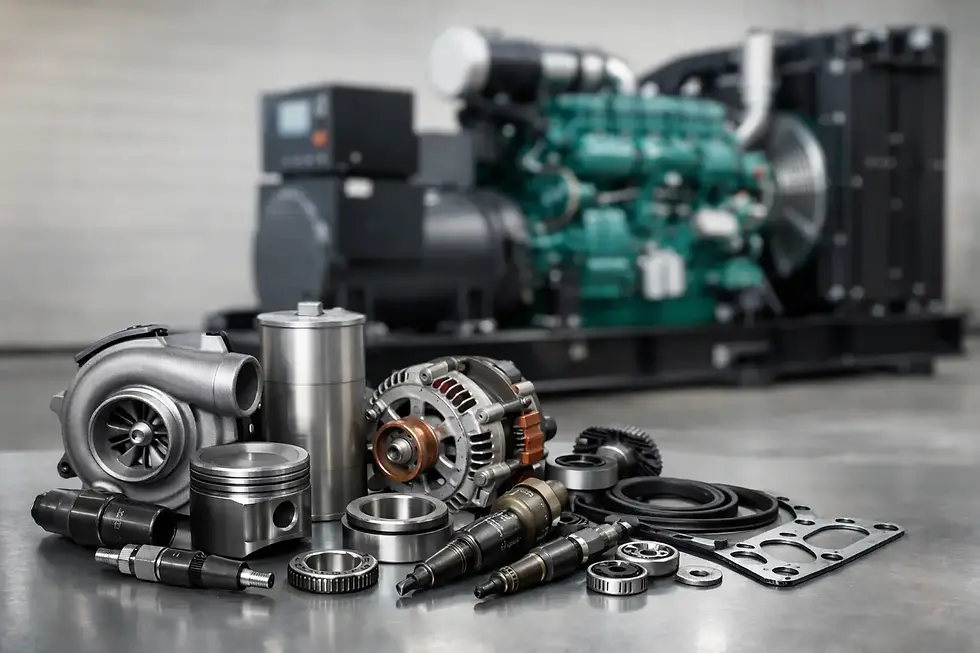
A commercial buyer should evaluate generator packages on six connected requirements: power rating, duty rating, engine and alternator specification, enclosure construction, fuel autonomy, and controls. Price matters, but it should be compared against an equivalent package. A low number without an enclosure, transfer switch, base tank, or freight clarity is not a lower project cost.
Start With Load and Duty, Not a Generator Model
A proper specification begins with a load schedule. List all equipment that must operate during an outage, including HVAC, refrigeration, pumps, lighting, security, communications, kitchen equipment, elevators where required, and selected receptacle loads. Separate essential loads from nonessential loads. Many facilities reduce generator size and fuel use by leaving decorative lighting, selected air-conditioning zones, and other discretionary circuits off the emergency system.
Then identify the largest motor starts and how they are controlled. Soft starters and variable-frequency drives can materially reduce starting demand, but they can also introduce harmonic considerations that need to be reviewed. Across-the-line motor starts may require a larger alternator or generator set. For projects with multiple compressors and pumps, sequence the loads so they do not all start at once when utility power fails.
It is also necessary to consider growth. A generator that will run near maximum load from day one leaves little margin for tenant additions, a larger pump, another cold room, or expanded air-conditioning. On the other hand, gross oversizing is not automatically smart. Diesel engines consistently operated at very light load can suffer from wet stacking, poor combustion, and unnecessary fuel expense. The correct target depends on the application, operating profile, ambient conditions, and manufacturer limits.
Commercial systems commonly range from 10 kW for small service facilities to 3,550 kW for large hotels, industrial plants, major multifamily properties, and utility-support applications. The useful question is not, “What is the biggest unit available?” It is, “What kW and kVA rating will carry this load reliably at this site?”
Account for Site Conditions
Nameplate output is based on defined conditions. High ambient temperatures, restricted airflow, elevation, and dirty operating environments can reduce available capacity or increase cooling requirements. In island applications, equipment often sits outdoors in direct sun with limited clearance around the enclosure. That is a different operating environment from an indoor mainland installation.
Specify the voltage, phase, frequency, and connection arrangement before requesting a quote. Common commercial requirements include 208V, 240V, 480V, three-phase, and 60 Hz, but the site distribution system controls the final choice. A mismatch can turn a competitively priced generator into a costly redesign.
Coastal Enclosures Are a Commercial Requirement
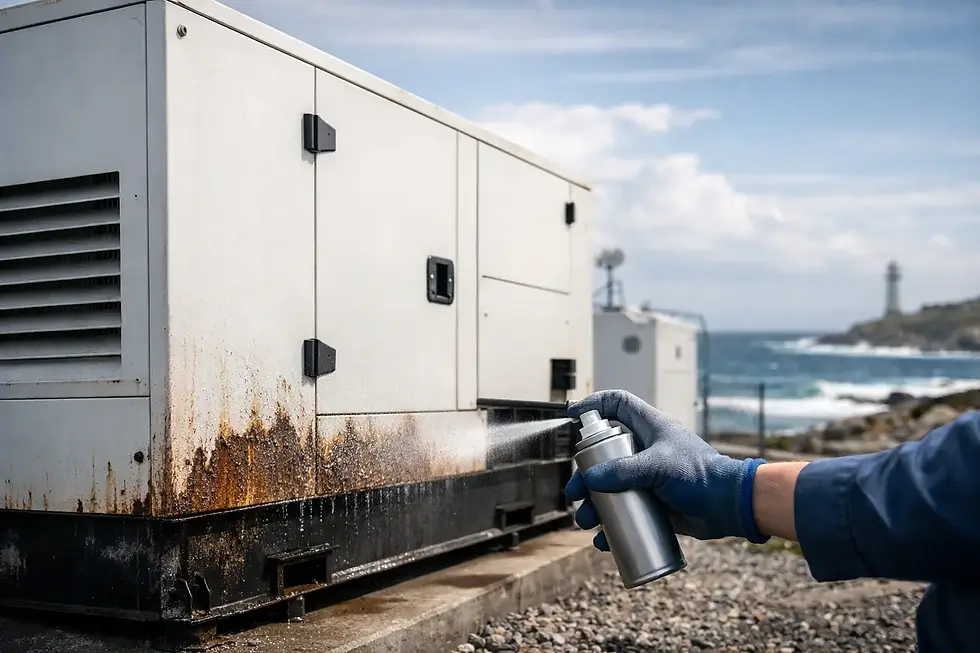
Salt air does not care whether a generator is used for standby or prime power. Standard painted steel enclosures can corrode quickly near the water, especially around hinges, fasteners, louvers, base frames, and fuel connections. Once corrosion begins, doors stop sealing properly, noise treatment deteriorates, and routine maintenance becomes more difficult.
For coastal installations, specify a marine-grade stainless steel or aluminum enclosure appropriate to the environment. Stainless steel offers strong corrosion resistance and durability for demanding fixed installations. Aluminum can reduce weight and resist corrosion well, which may be useful where transport, crane access, or barge delivery is a concern. The right choice depends on budget, exposure, location, and the structural design of the package.
Ask how the enclosure handles airflow, rain entry, service access, and sound attenuation. A quiet enclosure that restricts cooling airflow is not a good enclosure. A package should allow technicians to reach filters, belts, batteries, controls, and fluid service points without dismantling the installation. Where noise restrictions apply near guest rooms, residences, or offices, confirm the sound rating at the stated distance and operating load.
Fuel Storage Must Match the Outage Plan
Fuel autonomy should be calculated, not guessed. A standby system expected to cover short utility interruptions may only need an integrated base tank. A remote commercial site or property exposed to multi-day hurricane outages may require a larger sub-base, belly tank, or separate day tank and bulk storage arrangement.
Fuel consumption changes with load. The same generator can burn substantially more fuel at 75 percent load than at 25 percent load, so tank sizing should be based on the expected emergency load profile. Consider delivery access as well. If a tanker cannot reach the property after a storm, fuel stored on site may be more valuable than a slightly lower equipment price.
Tank material and construction matter in coastal markets. Stainless steel and aluminum fuel tank options help address corrosion exposure, while proper vents, gauges, containment requirements, and fuel transfer arrangements protect the operating system. Long-term storage also requires a fuel management plan. Diesel that sits for extended periods can accumulate water and contamination. Periodic testing, polishing where necessary, and exercising the generator under load are part of owning backup power.
Controls and Transfer Equipment Decide How Fast Power Returns
An automatic transfer switch, or ATS, monitors utility power and transfers the facility load to the generator after an outage. For most commercial standby applications, it is not an optional accessory. The ATS must be correctly rated for the electrical service, load type, and switching requirement. Some sites need open-transition transfer, while sensitive operations may justify closed-transition equipment or more advanced paralleling controls.
The generator controller should provide clear status information, alarms, run-hour tracking, automatic exercise programming, and remote monitoring capability where practical. For hotels, remote sites, and properties managed from another island, remote notification can shorten response time when a generator fails to start or reports a low-fuel condition.
For larger systems, controls may need to manage multiple generators, load sharing, priority loads, and staged load pickup. These are not features to add casually after delivery. They need to be designed into the package and coordinated with the facility electrical engineer or qualified installer.
Compare Complete Packages, Not Advertised kW Prices
When reviewing the best commercial diesel generators, ask every supplier to quote the same scope. A commercial package should clearly state the generator’s standby and prime ratings, voltage, frequency, engine, alternator, controller, enclosure material, tank capacity, ATS configuration, and included accessories. It should also identify what is excluded.
For export and Bahamas delivery, commercial buyers should request clarity on FOB or CIF terms, port of delivery, freight handling, customs duties, port fees, VAT exposure, and final site or mail boat delivery where applicable. A generator can be factory-ready and still become delayed if the logistics scope is vague.
Provide these project details when requesting a quotation:
Required kW or a load schedule, plus voltage, phase, and frequency
Standby, prime, or continuous operating duty and expected run hours
Installation location, salt exposure, noise limits, and enclosure preference
Required fuel runtime, tank arrangement, ATS needs, and delivery port
Carib Generators can configure commercial diesel and gas generator packages from approximately 10 kW to 3,550 kW with corrosion-resistant enclosure and fuel tank options for Caribbean and export requirements. Factory-direct pricing can make a major difference, but the savings are most meaningful when the delivered package is correctly specified for the actual job.
Before issuing a purchase order, have the installer or electrical engineer confirm foundation requirements, cable routing, grounding, exhaust discharge, ventilation clearances, transfer switch placement, and local permit obligations. The best time to solve those issues is while the equipment is being configured, not after it reaches the dock.
A generator purchase should leave you with a defined operating plan: what loads will run, how long they will run, where fuel will come from, and who receives the alarm when utility power fails. Specify that plan first, and the right equipment package becomes much easier to buy with confidence.

Comments